In vibration monitoring, unreliable data can quickly become a project problem. Near rail systems, generators, cranes, heavy machinery, high-voltage infrastructure, and industrial equipment, electromagnetic interference can distort geophone readings and make it harder to know whether a vibration event is real.
Traditional analog geophones have long been used in construction, infrastructure, and rail monitoring. However, their operating principle makes them vulnerable in electrically active environments. Understanding this limitation helps monitoring professionals choose the right sensor technology and avoid unnecessary uncertainty in their data.
Why electromagnetic interference matters
Electromagnetic interference, often shortened to EMI, can affect the quality and reliability of vibration measurements. When interference enters the measurement chain, it can create signals that look like vibration, hide real vibration activity, or make recorded data harder to interpret.
For monitoring professionals, this can lead to:
- False vibration events
- Distorted readings
- Increased background noise
- More time spent checking questionable data
- Lower confidence in compliance reports
- Additional site visits or troubleshooting
In sensitive projects, this uncertainty can create delays, extra work, and difficult discussions with contractors, asset owners, or stakeholders.
 If vibration monitoring takes place near rail systems, generators, motors, cranes, or high-voltage infrastructure, sensor technology can directly affect data reliability. MEMS sensors reduce the risk of EMI-related measurement errors.
Why geophones are vulnerable to EMI
Conventional geophones operate using a moving magnet and copper coil assembly. When the magnet moves through the coil, it generates an electrical signal that is proportional to vibration.
This principle works well in many environments. However, external magnetic or electrical fields can also induce currents in the coil. These unwanted signals may then be recorded as vibration data, even when they are partly or completely caused by electromagnetic interference.
This can happen near:
- Electrified rail systems
- Overhead traction power
- Substations
- Generators
- Cranes
- Heavy machinery
- Coiled extension cords
- Electric motors
- Welding equipment
- Industrial control systems
- High-voltage electrical infrastructure
In these environments, the issue is not always the geophone itself. The challenge is that the sensor technology is sensitive to the same type of electromagnetic activity that may already be present on site.
How EMI can affect geophone readings
Signal distortion
Electromagnetic fields can induce unwanted electrical currents inside the geophone. This can result in exaggerated, dampened, or completely false readings.
Increased data noise 
EMI can add background electrical noise to the measurement signal. This makes it harder to distinguish genuine vibration events from interference.
Frequency drift 
In some cases, interference can affect the apparent frequency content of a recorded signal. This may misrepresent the source, character, or severity of an event.
Calibration drift 
Extended exposure to strong magnetic fields may affect the magnetic components inside analog transducer-based geophones over time. This can lead to calibration drift and reduced sensor accuracy without obvious warning signs to the user.
Where EMI becomes a practical monitoring problem
Rail corridors
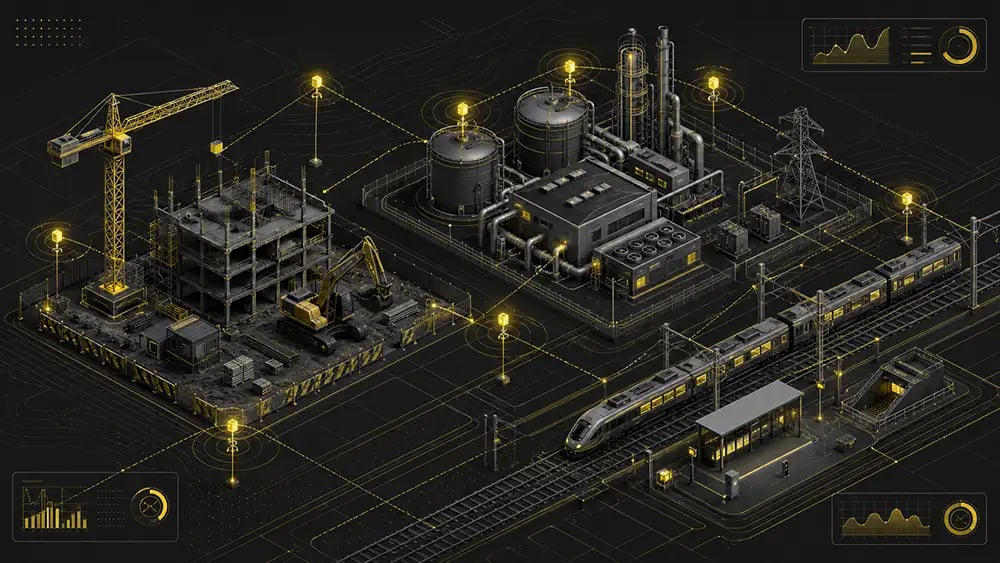
Overhead traction systems, electrified rails, substations, and switching equipment create continuous sources of electromagnetic activity. This can make trackside vibration monitoring especially challenging.
Construction sites
Generators, cranes, power tools, welding equipment, heavy machinery, and temporary electrical systems can all contribute to a noisy electromagnetic environment.
Industrial facilities
Factories and processing plants often contain large electric motors, switchgear, transformers, and control systems. These systems can interfere with sensitive analog monitoring equipment.
How to reduce EMI disruption
There are several ways to reduce the impact of EMI when working with traditional geophones.
Use shielded components
Shielded cables and protected geophone components can help reduce exposure to stray electromagnetic fields. However, shielding must remain intact. Even minor damage can significantly reduce its effectiveness.
Apply proper grounding
Correct grounding practices help dissipate induced currents before they distort vibration data.
Choose sensor placement carefully
Positioning sensors and cable routes away from known EMI sources can improve data quality. In some cases, simply rerouting a cable or relocating a sensor can make a measurable difference.
Use digital filtering
Post-processing software can help remove some forms of EMI-related noise after data collection. However, filtering cannot always fully restore distorted data.
Assess the site before monitoring starts
EMI sources should be considered during the monitoring design phase. Rail systems, high-voltage equipment, generators, motors, and temporary power setups should all be reviewed before deciding where and how sensors will be installed.
MEMS sensors: a simpler alternative for electrically noisy environments
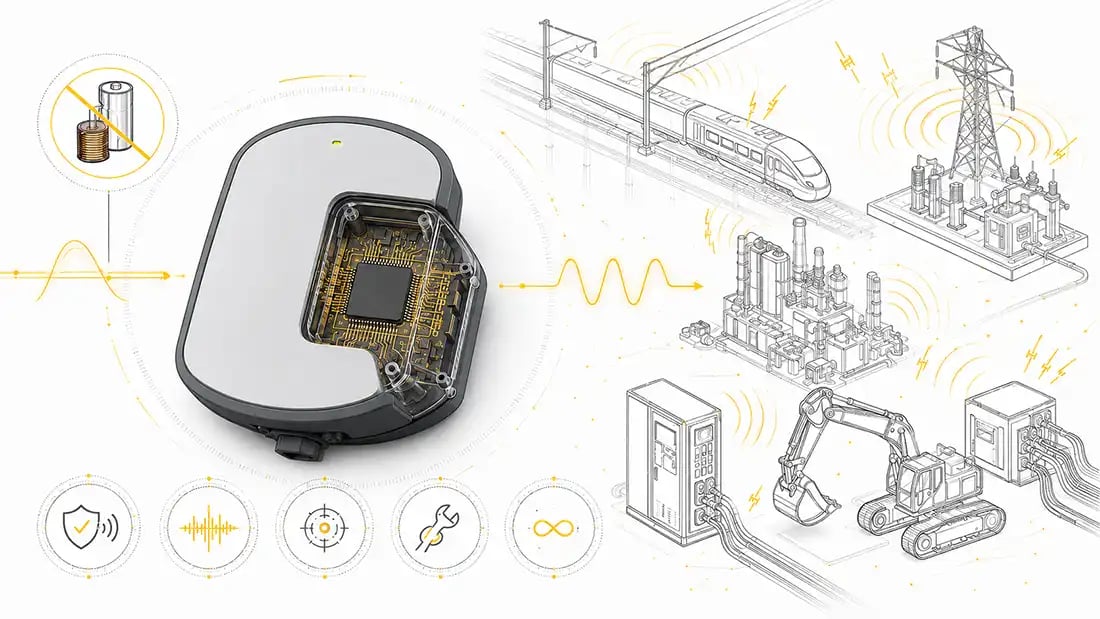
As monitoring environments become increasingly electrified, many professionals are turning to MEMS-based vibration sensors as an alternative to traditional analog geophones.
MEMS stands for Micro-Electro-Mechanical Systems. Unlike coil-and-magnet geophones, MEMS sensors do not rely on electromagnetic induction to generate a vibration signal. Instead, they use miniature solid-state mechanical structures and capacitive sensing technology.
Because there is no moving magnet and copper coil assembly, MEMS sensors are much less vulnerable to electromagnetic interference from nearby electrical systems.
This offers several practical advantages:
- Improved resistance to EMI and magnetic field distortion
- Lower background noise in electrically active environments
- Reduced risk of calibration drift caused by magnetic exposure
- Simpler installation with less dependence on shielding and grounding
- Greater long-term stability in harsh monitoring conditions
For rail corridors, industrial facilities, construction sites, and locations near heavy electrical equipment, MEMS-based monitoring systems can provide more reliable data with fewer EMI-related complications.
Share this
When to use the Omnidots vibration monitoring and reporting solution

Ensuring true independence: Empowering contractors with Omnidots’ vibration monitoring system